JustHyb: battery remanufacturing seen from the inside
At Rematec we interview Aydemir Murat, CEO & Founder of JustHyb/Goze B.V. We ask him about his company and the services it offers in the field of remanufacturing and replacement of hybrid car batteries.
The hybrid battery market is full of misconceptions and "quick fixes" that don't last. I started JustHyb because I saw a massive gap between overpriced OEM parts that force perfectly good cars into the scrapyard, and the unreliable "hobbyist" market where people patch batteries together with mismatched cells. We decided to industrialize the process. We don't do guesswork. We built a system focused purely on data, capacity matching, and logistics. Today, we operate a dual structure: JustHyb serves the retail and DIY market, while our Goze B.V. portal strictly serves high-volume B2B professionals. We provide the essential, balanced cell blocks, leaving the heavy metal casings in the customer's workshop to keep shipping efficient and costs down.
JustHyb specializes in refurbished, “as new” and new hybrid battery solutions. Could you explain the technical process you use to assess, select, balance and match used battery modules before they are returned to service?
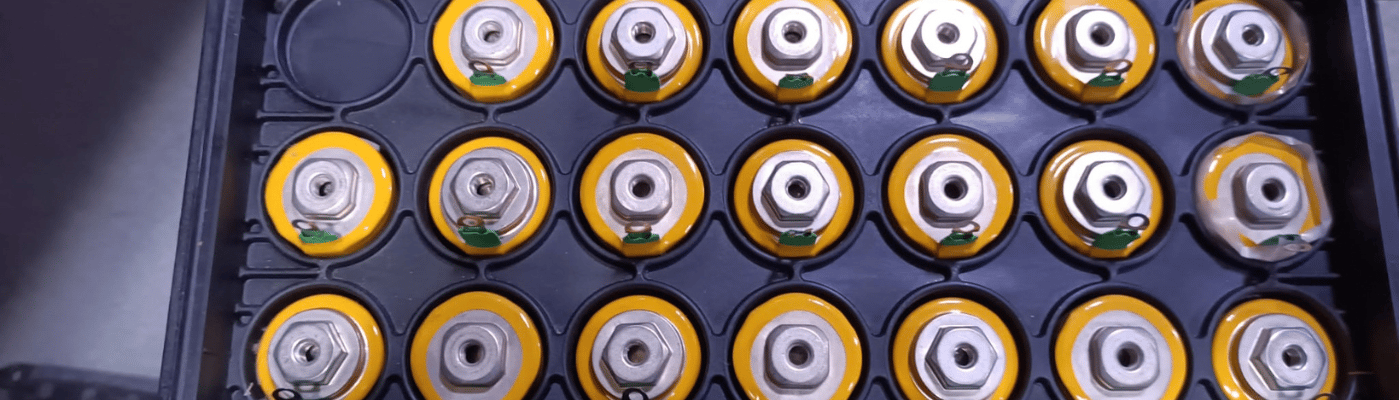
We look at hard data, not just surface voltage. Surface voltage lies. When a core arrives, it is stripped and visually inspected. If a battery has been tampered with or is full of mismatched "trash" cells from a previous failed repair, we reject it entirely. For the cells that pass physical inspection, we put them through deep charge and discharge cycles under heavy load.
Based on their true Ah capacity, we divide them into distinct tiers. Our "As New" sets are built strictly from OEM cells with a minimum capacity of 75%, and we mix a maximum of two serial numbers to guarantee a highly matched set. Our "Refurbished" sets use cells with a minimum 65% capacity; they contain various serial numbers but are rigorously matched to perform together. We then supply these sets with newly cleaned busbars and nuts, ready for the installer to drop into the original casing.
Battery testing and quality control are crucial for the safety and reliability of remanufactured hybrid batteries. Which diagnostic, testing and validation technologies does JustHyb use to determine the remaining capacity, internal resistance and overall State of Health of each module?
We rely on automated battery cycling rigs that push the cells through demanding profiles. We don't just test if a cell holds a charge; we monitor how it behaves when the load is applied. Internal Resistance (IR) is measured dynamically during these cycles. If a module's voltage drops off a cliff under load, or if its IR spikes, it is scrapped. By logging the entire cycle data, we calculate the exact State of Health (SoH). You cannot build a reliable battery pack if you have a 5% variance between the strongest and weakest cell. Our technology is focused on identifying those outliers before they ever leave our workshop.
Your company supplies hybrid battery solutions for Toyota, Lexus, Honda, Peugeot and Citroën and operates across the European B2B market. What are the main challenges involved in scaling hybrid-battery remanufacturing while maintaining consistent quality, traceability and warranty performance?
The technology is not the bottleneck; logistics and human nature are. Shipping 30kg hazardous freight across Europe is a nightmare. Transport companies frequently mishandle packages or arbitrarily enforce weight limits, which is why we had to innovate by splitting our shipments into multiple boxes under 20kg to bypass courier restrictions. The second major challenge is core returns. Our pricing model relies on getting original, untampered battery cores back. Customers often try to return depleted "hobbyist" projects or boxes full of loose, rattling cells that get destroyed in transit. To scale, we had to implement a ruthless policy: a maximum of 5 bad cells are allowed in a core return, and tampered sets forfeit the deposit entirely. Scaling requires filtering out the noise and working strictly with professionals who understand high-voltage safety and our zero-tolerance policies.
As the European vehicle fleet progressively moves from conventional hybrids toward plug-in hybrids and BEVs, how does JustHyb see its expertise in battery refurbishment developing, and what role can independent battery specialists play in creating a more circular automotive aftermarket?
"Circular economy" is a popular buzzword, but for independent specialists, it is basic survival. OEMs have a vested interest in selling a €15,000 replacement battery or a brand-new car. As the market transitions to PHEVs and BEVs, moving from NiMH to Lithium-ion architectures, the complexity of Battery Management Systems (BMS) and thermal management increases drastically.
However, the fundamental principle remains the same: a €30,000 vehicle should not be scrapped because a few cell blocks have degraded. Independent specialists are the only firewall preventing mass vehicle scrappage. Our expertise in diagnosing module failure, isolating bad cells, and matching capacities will transition directly to larger EV packs. The independent aftermarket will have to evolve from simply swapping modules to highly technical, board-level BMS diagnostics and localized lithium-cell replacement.