Regulation (EU) 2026/1738 on End-of-Life vehicles
Regulation (EU) 2026/1738 on circularity requirements for vehicle design and on management of End-of-Life vehicles has been published. It represents one of the most significant changes to the European automotive regulatory framework in the field of circular economy, vehicle design and End-of-Life vehicle management.
Adopted by the European Parliament and the Council on 8 July 2026 and published in the Official Journal of the European Union on 24 July 2026, the Regulation establishes a new, directly applicable framework covering the entire vehicle life cycle.
This includes design and production, as well as repair, reuse, remanufacturing, recycling and final treatment. The Regulation entered into force on 13 August 2026, although many of its substantive requirements will apply progressively over the coming years.
A big step forward for remanufacturing
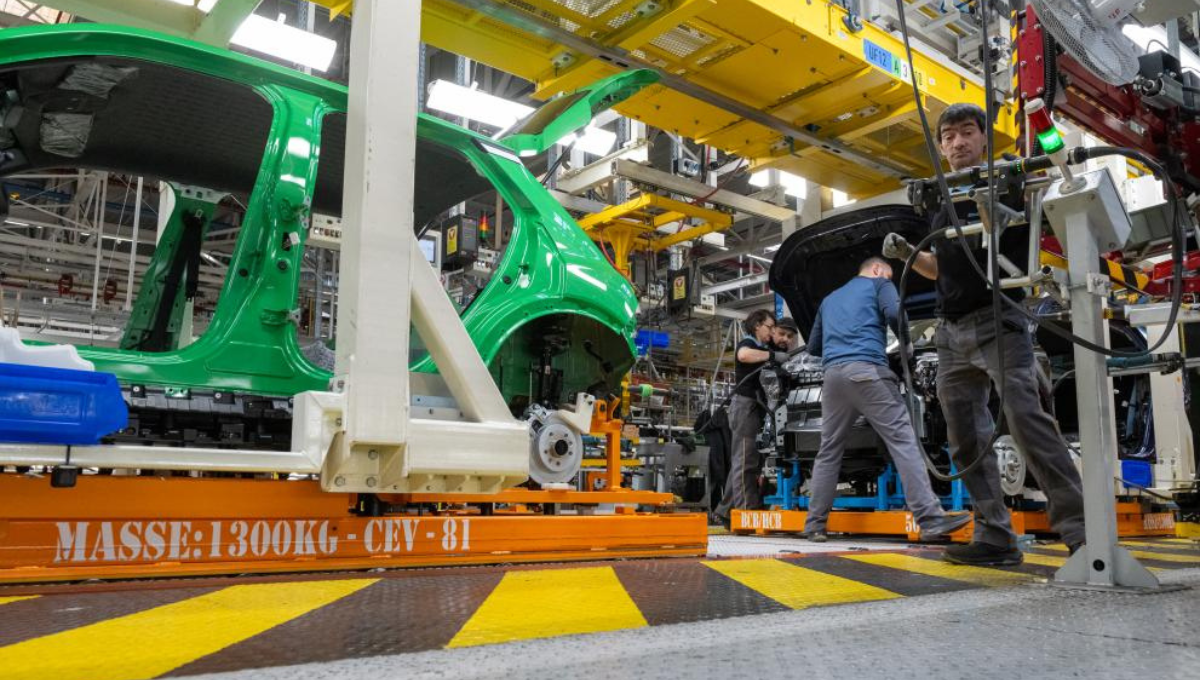
The Regulation is particularly important for remanufacturing because it provides regulatory support for preserving components, facilitates their removal and replacement, encourages remanufacturing and refurbishment, creates demand for recycled materials and introduces digital information systems that can support traceability throughout the vehicle life cycle.
The framework contains a carefully structured timetable extending from 2029 through 2032 and 2036. Nevertheless, manufacturers, suppliers, dismantlers, remanufacturers, recyclers and aftermarket companies need to begin preparing now.
The direction of European policy is clear: future vehicles will have to be designed not only to drive efficiently and safely, but also to be dismantled, repaired, reused, remanufactured and recycled efficiently. The central objective of Regulation 2026/1738 is to move the automotive industry from a predominantly linear model towards a genuinely circular one.
Manufacturers will have to consider what happens to a vehicle, its components and its materials not only when they are produced and sold, but also when they are repaired, dismantled, reused, remanufactured, recycled or finally discarded. This approach is particularly important for the automotive aftermarket and remanufacturing sector because it places greater emphasis on preserving the value of components rather than simply recovering their raw materials.
More recyclable and eco-sustainable vehicles
One of the most important provisions concerns vehicle design. From 1 September 2032, new vehicle types covered by the Regulation and type-approved under Regulation (EU) 2018/858 must be designed so that at least 85% of their mass is reusable or recyclable and at least 95% is reusable or recoverable.
Manufacturers must obtain and verify detailed information throughout their supply chains concerning the nature and mass of materials used in vehicles. They must also document the material composition necessary to demonstrate compliance.
These requirements will make circularity a measurable engineering parameter rather than simply an environmental objective.
The Regulation also introduces specific requirements for recycled materials. From 1 September 2032, plastics in newly type-approved vehicle types must contain at least 15% recycled plastic by weight from post-consumer plastic waste. This requirement increases to 25% for vehicle types type-approved from 1 September 2036.
Furthermore, at least 20% of the recycled-plastic target must come from plastics recycled from End-of-Life vehicles or from parts and components removed during the vehicle's use phase.
This provision is strategically important because it creates a direct link between End-of-Life vehicle treatment and the manufacturing of new vehicles, helping to establish a closed-loop market for automotive plastics.
An easier removal and replacement of components
Another particularly important innovation is the requirement to design vehicles so that certain components can be removed and replaced without unnecessary difficulty or damage. From 1 September 2032, new vehicle types must allow authorized treatment facilities to remove specified components for replacement, reuse, recycling, remanufacturing or refurbishment where technically feasible.
Even more significant for the transition towards electrification, electric-vehicle batteries, battery packs and e-drive motors must be designed so that they can be removed and replaced in a readily accessible and non-destructive manner by authorized treatment facilities or repair and maintenance operators.
This represents a major regulatory recognition of the importance of battery and electric-powertrain circularity.
Incentives to help customers and the remanufacturing sector
For the remanufacturing industry, Article 7 and Article 32 are particularly relevant. Article 32 requires Member States, from 1 September 2029, to introduce incentives for the reuse, remanufacturing, retrofitting and refurbishment of vehicle parts and components removed either during the vehicle's use phase or at the end of its life.
Possible measures include requiring repair operators, under appropriate conditions, to offer customers used, remanufactured or refurbished components as an alternative to new parts. They may also include economic incentives designed to stimulate demand for these products.
This is an important change because remanufacturing is no longer treated simply as an industrial activity. It becomes an element of the European Union's circular-economy policy for vehicles.
Stronger obligations for manufacturers
From 1 September 2029, manufacturers will be responsible for the vehicles they first place on the market in a Member State, including ensuring that vehicles eventually becoming End-of-Life vehicles are properly collected and treated.
Manufacturers must also ensure that the operators responsible for waste management meet the applicable reuse, recycling and recovery targets. This approach is intended to make vehicle manufacturers more directly responsible for the environmental consequences associated with their products after the end of their useful life.
It could also encourage manufacturers to cooperate more closely with dismantlers, authorized treatment facilities, recyclers, remanufacturers and other aftermarket operators.
The targets for End-of-Life vehicles
From 1 January 2030, Member States must ensure that waste-management operators achieve at least 95% reuse and recovery by average vehicle weight per year, excluding batteries, and at least 85% reuse and recycling.
From 1 January 2032, a specific annual target of at least 30% recycling of the total average weight of plastics contained in End-of-Life vehicles will apply.
These requirements should increase pressure on dismantling and recycling operators to improve sorting, separation and material recovery technologies. At the same time, they create more opportunities to divert valuable components towards reuse and remanufacturing.
Digital Circularity Vehicle Passport and reverse logistics
The Regulation also addresses digitalization. From 1 September 2032, every vehicle placed on the EU market within its scope must have a Digital Circularity Vehicle Passport. The passport will contain information concerning parts and components, substances subject to specific requirements, recycled content and the official spare-parts catalogue. The information must be accurate, complete and up to date, based on open standards, machine-readable, searchable and transferable through interoperable data networks without vendor lock-in.
The system is intended to interact with other environmental and battery-related digital passports already established or being developed under EU legislation. For the aftermarket and remanufacturing sectors, this digital layer could become particularly valuable. Access to reliable information about materials, components, batteries, replacement procedures and vehicle configurations can facilitate dismantling, component identification, condition assessment and traceability.
It may also improve reverse logistics by making it easier to determine which components can be reused, refurbished or remanufactured and where they should be sent. In this sense, the Digital Circularity Vehicle Passport could become an important technological infrastructure for the European circular automotive economy rather than simply another compliance database.
Stricter End-of-Life vehicle controls
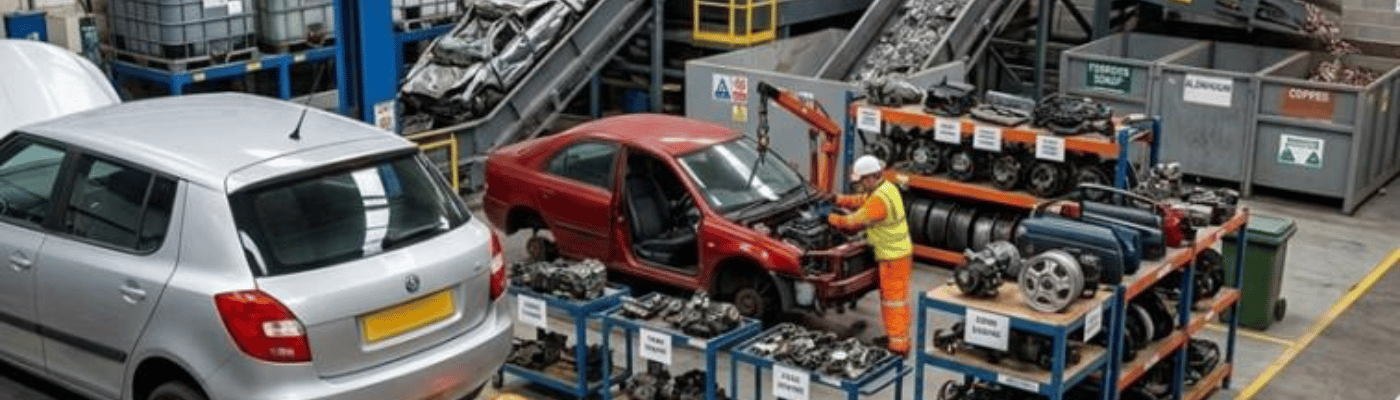
Establishments intending to carry out treatment operations must obtain appropriate authorization, while the legislation establishes requirements concerning collection, treatment, shipment and export. The export provisions are particularly relevant because the EU wants to prevent vehicles that are effectively waste from being exported to third countries under the guise of used vehicles.
Automated verification and customs-control mechanisms are therefore introduced to improve traceability and reduce the risk of illegal shipments. This is important both environmentally and economically because it should help ensure that vehicles reaching the end of their useful European life are properly managed rather than simply transferred outside the EU's regulatory system.
Another significant element is the restriction of landfill disposal. From 1 September 2029, certain shredder fractions from End-of-Life vehicles containing non-inert waste will not be accepted in landfills if they exceed the specified regulatory limits.
This reinforces the broader objective of extracting greater value from End-of-Life vehicles and reducing the amount of material ultimately disposed of as waste.