Valeo: a leader in brake caliper technology
Brake calipers are among the most important safety components in any vehicle, ensuring reliable braking performance under a wide range of driving conditions. As the automotive industry moves toward electrification, advanced driver assistance systems (ADAS) and increasingly software-driven vehicle architectures, braking systems have become significantly more sophisticated. Modern brake calipers are lighter, more compact and often integrate electronic parking brake (EPB) technology, corrosion-resistant materials and highly engineered hydraulic mechanisms.
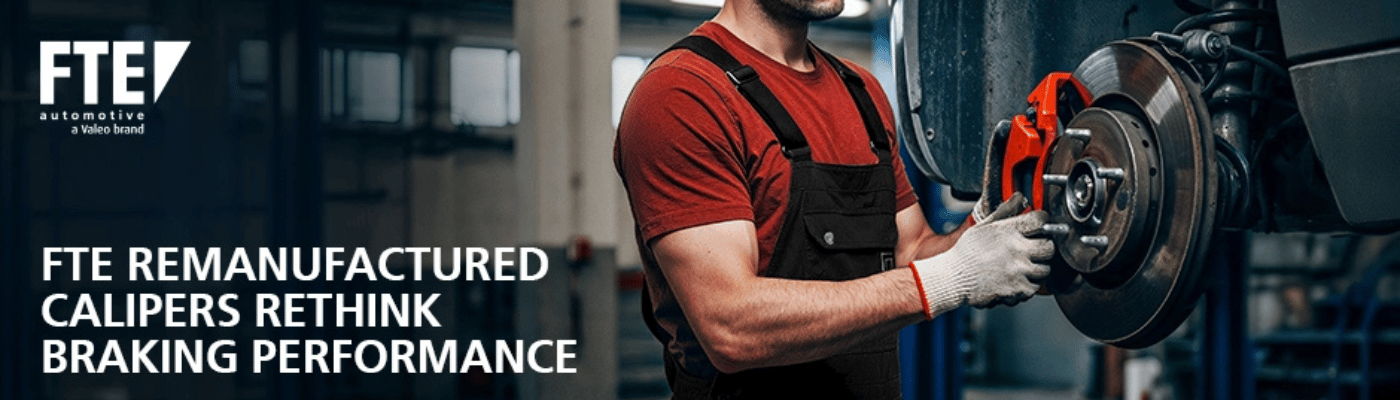
Restoring brake calipers to original equipment performance
These innovations have also transformed the remanufacturing process, which today requires advanced industrial technologies capable of restoring both the mechanical integrity and functional performance of each component while complying with strict quality and safety standards. In this evolving landscape, Valeo has become one of the leading companies in industrial brake caliper remanufacturing by combining original equipment know-how, large-scale manufacturing capabilities and a strong commitment to sustainable mobility.
Valeo considers remanufacturing far more than a repair operation. Its objective is to restore used brake calipers to original equipment performance through standardized industrial processes that ensure the same levels of reliability, durability and safety expected from new components. This approach reflects the company’s long-standing experience as a global automotive technology supplier and its close collaboration with vehicle manufacturers around the world.
Step by step: how the process works
The remanufacturing process begins with the collection of used brake calipers, commonly referred to as cores. After entering the remanufacturing facility, every unit is identified, inspected and completely dismantled so that each individual component can be evaluated separately. Hydraulic pistons, seals, guide pins, springs and other wearable parts are removed, while the caliper housing undergoes intensive cleaning to eliminate corrosion, grease, brake dust and other contaminants accumulated during years of operation.
Cleaning is a critical stage because it reveals defects that could otherwise remain hidden. Once the surface has been restored, the caliper body is carefully examined using both manual inspections and automated measurement technologies to verify that no cracks, excessive corrosion or structural deformation are present. Precision dimensional inspections confirm that every reusable housing still complies with original manufacturing tolerances. Components that fail to meet these requirements are rejected, while suitable housings continue through the remanufacturing cycle.
The rebuilding process includes the systematic replacement of all wear-related components. New seals, protective boots, guide bushes and other consumable parts restore hydraulic efficiency, while pistons and sliding elements are either refurbished or replaced depending on their condition. Every operation is carried out according to standardized production procedures designed to eliminate inconsistencies and ensure repeatable product quality. Rather than simply repairing damaged parts, industrial remanufacturing restores the complete functionality of the brake caliper to original performance standards.
Original equipment expertise as a quality advantage
A major advantage for Valeo is its extensive original equipment engineering experience. As one of the world's leading automotive suppliers, the company develops advanced vehicle systems directly for major manufacturers, giving it detailed knowledge of production methods, engineering specifications, materials and quality requirements. This expertise allows Valeo to apply original equipment standards throughout its remanufacturing operations, ensuring that rebuilt brake calipers deliver performance comparable to newly manufactured components.
The acquisition of FTE Automotive further strengthened Valeo’s capabilities in braking technologies. FTE has long been recognized as a specialist in hydraulic brake and clutch systems, contributing decades of engineering expertise in brake hydraulics, wheel cylinders, master cylinders and brake calipers. This integration has significantly expanded Valeo’s product portfolio, allowing the company to offer one of the widest ranges of remanufactured brake calipers for passenger cars and light commercial vehicles across Europe.
Meeting the needs of a changing vehicle fleet
Today’s vehicle fleet demands increasingly diverse braking solutions. Valeo’s portfolio includes conventional floating and fixed brake calipers, rear calipers with integrated parking brake mechanisms and electronically controlled parking brake units. These mechatronic systems introduce new technical challenges because remanufacturing must restore not only hydraulic performance but also the functionality of electric actuators and electronic control systems.
Testing, traceability and reliability
As brake-by-wire technologies and electronic vehicle architectures continue to develop, expertise in remanufacturing these advanced components will become increasingly important. Quality assurance remains central to Valeo’s industrial philosophy. Every remanufactured brake caliper undergoes a comprehensive series of inspections and functional tests before returning to the aftermarket.
Hydraulic pressure testing verifies sealing performance, leakage tests confirm system integrity and functional inspections ensure smooth piston movement and correct mechanical operation. Automated testing equipment provides repeatable quality controls and complete documentation for every individual unit, while digital traceability systems record each stage of the manufacturing process from core collection to final distribution.
Digital technologies in modern remanufacturing
Digital technologies are playing an increasingly important role throughout modern remanufacturing operations. Automated production management systems, barcode identification, digital inspection equipment and integrated quality databases enable manufacturers to monitor every production phase with exceptional accuracy. Advanced measuring systems improve precision, while digital inspection technologies help identify defects that would be difficult to detect through conventional visual inspections.
These tools not only improve manufacturing efficiency but also provide valuable production data that supports continuous process optimization and long-term product reliability. Sustainability has become one of the main drivers behind Valeo’s remanufacturing strategy.
A circular approach to brake calipers
Reusing the original brake caliper housing dramatically reduces the demand for raw materials, energy consumption and industrial processing compared with manufacturing an entirely new component. This approach significantly lowers greenhouse gas emissions while reducing industrial waste, making remanufacturing an essential contributor to the automotive sector’s transition toward a circular economy.
Euro 7 and the rise of non-exhaust emission standards
The final Euro 7 agreement reached during the trilogue negotiations between the European Commission, the European Parliament and the Council represents a landmark change in European vehicle emissions legislation by extending regulation beyond traditional tailpipe pollutants. The regulation introduces mandatory limits for non-exhaust particulate emissions generated by brake systems, recognizing that brake wear has become one of the most significant sources of urban particulate matter as exhaust emissions continue to decline.
This new approach reflects the reality that all vehicles, including battery-electric vehicles, produce brake particles through friction between brake pads and discs. The Euro 7 agreement encourages manufacturers to develop cleaner braking technologies while maintaining the highest levels of vehicle safety.
Innovation across the braking sector
The agreement is expected to accelerate innovation across the entire braking sector. Brake manufacturers are investing in new friction materials, low-wear brake pads, advanced disc coatings and lightweight caliper designs that reduce particle generation without compromising braking performance. At the same time, testing laboratories and component suppliers are developing new measurement technologies capable of accurately quantifying brake particle emissions under standardized conditions.
New opportunities for remanufacturing
The Euro 7 framework also creates new opportunities for the automotive remanufacturing industry. As brake systems become increasingly sophisticated, remanufactured calipers and related hydraulic components will need to deliver original-equipment performance while supporting the lower emission targets established by the regulation. High-quality remanufacturing processes, rigorous testing procedures and complete product traceability will become even more important as workshops and fleet operators seek sustainable alternatives to new components.
For Valeo and other companies active in the circular economy, Euro 7 also highlights the strategic value of remanufacturing by promoting resource efficiency, reducing the environmental impact associated with manufacturing new components and extending product life cycles.
Shaping the future of the automotive aftermarket
Through its combination of original equipment engineering, industrial-scale manufacturing and continuous investment in advanced remanufacturing technologies, Valeo is helping shape the future of brake caliper remanufacturing. Its approach demonstrates how engineering excellence, digital innovation and circular economy principles can work together to deliver safe, reliable and environmentally responsible solutions for the modern automotive aftermarket.