Remanufacturing and Chinese Parts: Driving the Future Aftermarket
The global automotive aftermarket is evolving rapidly, offering customers an increasingly wide range of replacement components. Alongside original equipment and remanufactured parts, new aftermarket products from manufacturers worldwide, particularly China, are becoming more competitive in terms of price, quality and availability. This development reflects China's growing technological capabilities, investments in manufacturing and expanding international distribution networks. Rather than viewing this evolution as a direct confrontation between new and remanufactured components, it is more constructive to examine how the remanufacturing industry can adapt to changing market conditions, strengthen its competitive advantages and respond to the needs of an increasingly demanding customer base.
The evolution of Chinese component manufacturing
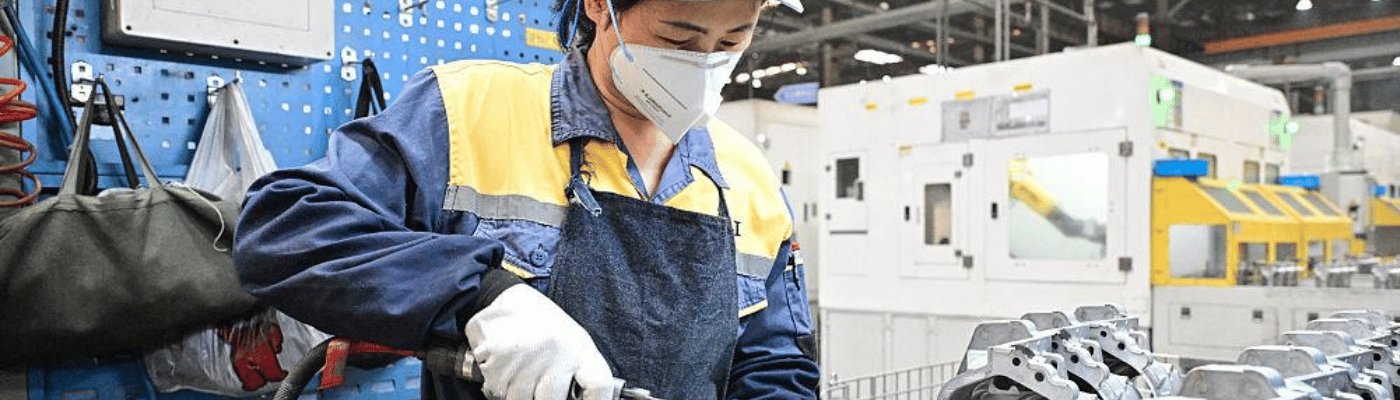
China has developed from a major low-cost manufacturing centre into one of the world's most important automotive production and technology hubs. Its integrated supply chains, large industrial capacity and investments in automation and digital manufacturing have improved the competitiveness of its automotive components. Chinese manufacturers are also expanding in electric vehicles, batteries, power electronics and advanced automotive systems. Consequently, international distributors and workshops have access to an increasing number of new spare components that offer competitive prices and increasingly consistent quality. This evolution encourages the entire aftermarket to improve its efficiency, technical standards and customer service.
Demonstrating the value of remanufacturing
Professional remanufacturing involves much more than cleaning and reselling a used component. It is a controlled industrial process that includes inspection, disassembly, cleaning, measurement, replacement of worn or damaged elements, reassembly and final testing. Its principal advantage is the recovery of the technical and material value of an existing component, extending its useful life while reducing the need for new raw materials and certain manufacturing operations.
To communicate this value effectively, remanufacturers must demonstrate that their products meet defined performance requirements. Customers increasingly consider not only purchase price but also reliability, warranty, availability, service life and environmental impact. Remanufacturing must therefore be presented as a technically credible and economically attractive solution, supported by measurable evidence.
Efficiency, automation and digitalisation
Improving production efficiency is essential for maintaining competitiveness. Automation, robotics, machine vision and advanced testing systems can reduce processing times, improve consistency and minimise unnecessary operations. These technologies can also help remanufacturers control labour and production costs without compromising quality.
Digitalisation offers further opportunities. Digital identification, production monitoring and advanced diagnostics can improve component traceability throughout the remanufacturing process. Recording inspection results, replacement operations and final test data provides manufacturers with better operational information while increasing customer confidence.
Learning from the manufacturing efficiency achieved by Chinese suppliers can help remanufacturers identify opportunities to optimise production, integrate their supply chains and use resources more effectively.
Reverse logistics and core management
The availability and condition of returned components are central to remanufacturing economics. Collecting, identifying, transporting and inspecting cores adds complexity that does not normally exist in the sale of a completely new component. Digital core-management platforms, efficient collection networks and closer cooperation with distributors and workshops can reduce these costs. Better forecasting and inventory management can also improve core availability and shorten production lead times. Making the return process simpler and more reliable would strengthen the commercial appeal of remanufactured components while improving the efficiency of the wider aftermarket supply chain.
An ageing vehicle fleet and new business opportunities
The increasing age of vehicle fleets in many mature markets supports demand for affordable replacement components. This is particularly relevant to commercial vehicles and fleet operators, for whom maintenance costs and downtime directly influence profitability.
Remanufacturers can strengthen their position by offering more than individual products. Integrated programmes covering component availability, core collection, warranty management, technical assistance and stock planning can provide additional value to distributors and fleet customers. In these applications, the overall cost of ownership and the reliability of the supply chain can be as important as the initial purchase price.
Electrification and new remanufacturing opportunities
The transition towards electrification is changing the range of components available for aftermarket repair and replacement. Although traditional remanufacturing remains important for engines, transmissions, starters, alternators and turbochargers, future opportunities will increasingly include electric motors, power electronics, electronic control units, thermal-management systems and batteries. Developing these markets requires investment in specialised diagnostic equipment, software, testing infrastructure, safety procedures and technical training. Battery systems and electronic components often require different methods from conventional mechanical parts, making technical expertise particularly important. Companies that invest in these capabilities can prepare for emerging demand and reduce their dependence on traditional product categories.
Sustainability and measurable environmental benefits
Remanufacturing contributes to the circular economy by retaining the value of existing components and reducing demand for virgin materials. However, environmental benefits should be demonstrated through credible data rather than general claims. Measuring material savings, energy consumption, carbon emissions and other lifecycle impacts can help customers assess the environmental performance of remanufactured products. Such information can also support businesses responding to sustainability requirements in procurement and supply-chain management. European and international policies increasingly promote circularity through reuse, refurbishment, remanufacturing and recycling. This creates opportunities for companies capable of documenting their environmental performance and integrating circular principles into their business models.
Quality assurance and industry standards
As new aftermarket products improve, remanufacturers must demonstrate the reliability of their own solutions through consistent quality procedures, testing, warranties and traceability.
Clear technical specifications and recognised quality standards can help distinguish professional remanufacturing from informal refurbishment or the resale of used parts. Greater standardisation would also improve transparency and make it easier for distributors, workshops and end users to evaluate products confidently. Quality assurance should therefore be regarded as a fundamental part of the commercial proposition, not simply a production requirement.
A forward-looking strategy for global remanufacturing
The changing automotive aftermarket requires remanufacturers to focus on continuous improvement rather than defensive competition. Their priorities should include greater industrial efficiency, investment in digital technologies, improved reverse logistics, stronger quality assurance and the development of capabilities for emerging vehicle technologies.
The growth of high-quality Chinese components reflects the increasing sophistication of the global aftermarket. New and remanufactured products can serve different requirements according to price, application, component availability, technical specifications and customer priorities.
For the worldwide remanufacturing industry, the opportunity lies in making its particular strengths more visible and commercially relevant. By combining technical expertise, resource efficiency, reliable performance and effective customer service, remanufacturers can maintain a valuable role in the automotive supply chain. The future of the sector will depend on its ability to translate the principles of circularity into a competitive industrial model, demonstrating that extending the life of existing components can deliver tangible economic, technical and environmental benefits.