AI and reverse logistics in remanufacturing will be featured at Rematec Amsterdam 2027
With Rematec Amsterdam 2027 just around the corner, starting this month we will take an in-depth look at the most important and timely topics shaping the world of remanufacturing in the lead-up to the exhibition.
We begin with the growing role of Artificial Intelligence and the digital transformation that is revolutionizing the remanufacturing industry. Traditionally regarded as a labor-intensive activity built around mechanical expertise and manual inspection, remanufacturing is rapidly evolving into a highly connected, data-driven industrial ecosystem. Powered by artificial intelligence (AI), machine learning, cloud computing, Industrial Internet of Things (IoT), computer vision and advanced automation, the sector is becoming more efficient, sustainable and better equipped to support the transition towards a circular economy.
How AI is transforming remanufacturing
Artificial intelligence is revolutionizing the remanufacturing industry by transforming two of its most critical processes: identifying reusable components and managing reverse logistics.
The digital transformation begins with the evaluation of returned cores, where every remanufactured product starts. Traditionally based on the expertise of skilled technicians performing visual inspections, dimensional measurements and functional tests, this process is now enhanced by AI, delivering faster, more accurate and consistent assessments.
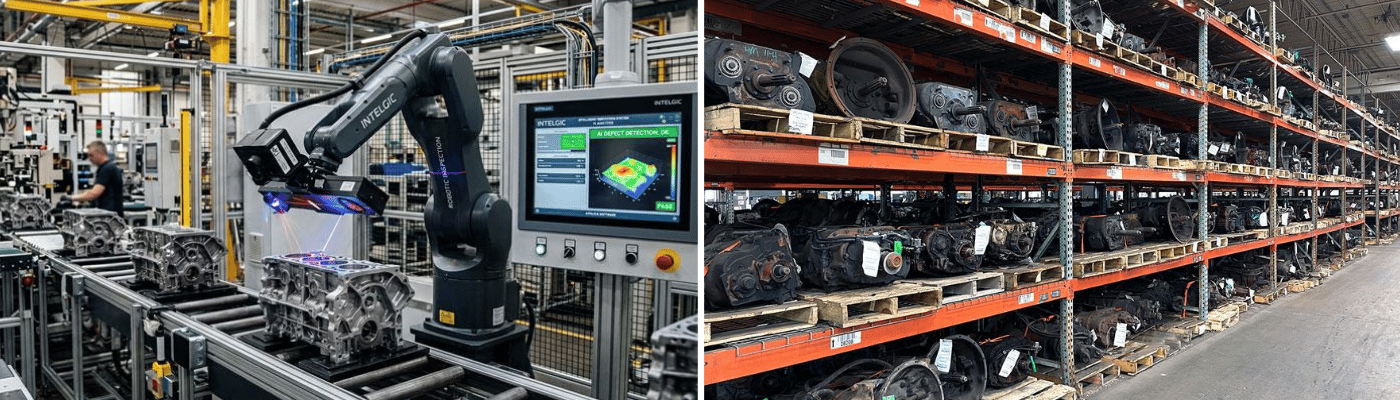
Advanced computer vision systems equipped with high-resolution cameras can detect cracks, corrosion, wear, deformation and other defects within seconds. AI algorithms trained on extensive inspection data continuously improve their ability to distinguish superficial cosmetic damage from structural defects that could compromise remanufacturing.
Artificial intelligence also enables intelligent classification, automatically directing components to the most suitable processing route. Parts in good condition may only require cleaning and testing, while others need machining or repair. Non-recoverable components are immediately sent for recycling, improving resource efficiency.
These capabilities are particularly valuable for increasingly sophisticated technologies such as hybrid powertrains, electric drive units, battery packs, electronic control units and ADAS systems.
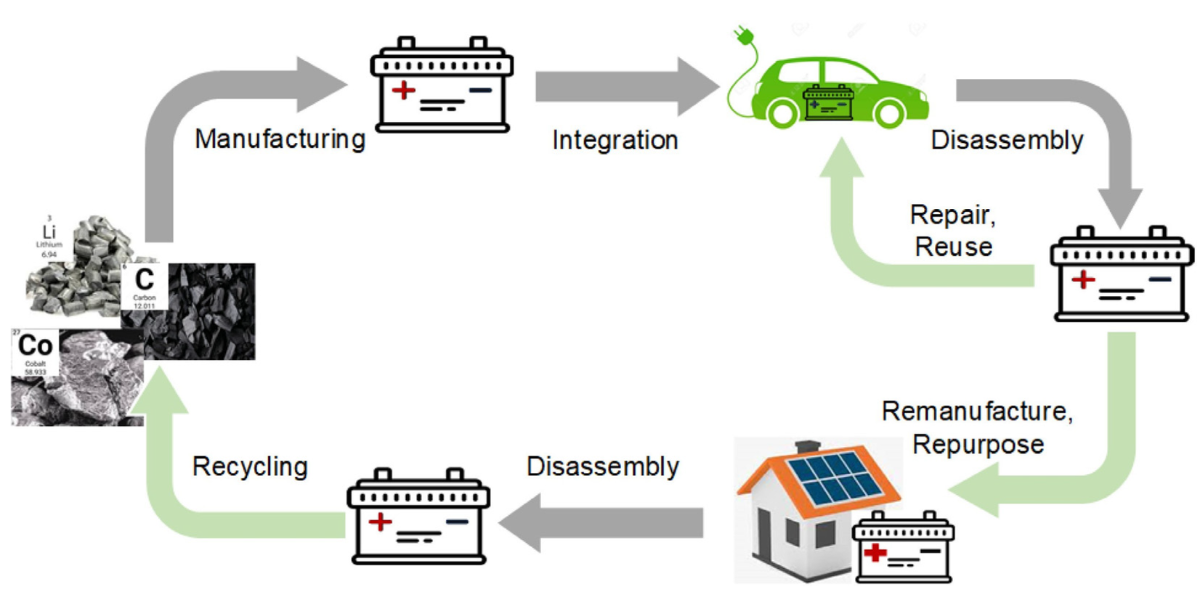
Digital transformation also extends to reverse logistics, one of the most complex aspects of remanufacturing. Millions of used components returned from workshops, distributors and fleet operators must be managed efficiently to ensure a reliable supply of remanufacturable cores.
Modern cloud-based digital platforms connect every participant in the supply chain, providing real-time information on inventory, shipments and production requirements. Artificial intelligence further enhances these systems by analyzing historical returns, vehicle population data, seasonal demand and maintenance trends to predict future core availability.
This predictive capability allows remanufacturers to optimize logistics, reduce transport and storage costs, improve production planning and deliver remanufactured products to customers more efficiently.
The evolution of reverse logistics and digital traceability
Digital traceability has become a fundamental element of modern reverse logistics. Technologies such as RFID, QR codes and digital product passports enable every component to be tracked throughout its entire lifecycle, recording manufacturing data, repair history, remanufacturing operations and quality inspections.
As circular economy legislation continues to evolve, comprehensive digital traceability will play an increasingly important role in demonstrating regulatory compliance, supporting sustainability reporting and strengthening customer confidence in remanufactured products.
Once reusable components arrive at the remanufacturing facility, digital technologies continue to transform production. Smart factories increasingly combine robotics, automation and artificial intelligence to improve quality, productivity and operational flexibility.
Collaborative robots assist technicians with repetitive tasks, while automated cleaning systems adapt to the condition of each component. Machine vision systems inspect cleaned parts before further processing, ensuring contamination has been eliminated and quality standards are consistently achieved.
Artificial intelligence also optimizes machining by monitoring production parameters in real time, predicting tool wear and recommending process adjustments before quality is affected.
Predictive maintenance systems use sensor data to monitor production equipment, reducing downtime and improving efficiency. At the same time, digital twins allow engineers to simulate manufacturing processes, optimize production layouts and evaluate workflow improvements before implementation.
The digital transformation concludes with quality certification. Automated test benches evaluate components such as electronic control units, turbochargers, steering systems, electric motors and battery modules, while AI analyses operational data to verify compliance with original equipment specifications and detect subtle anomalies.
Each remanufactured product can then be supplied with a digital quality certificate containing production records, inspection reports and performance data, accessible through cloud-based platforms or QR codes.
As vehicle technologies become increasingly sophisticated, artificial intelligence, connected digital platforms and smart manufacturing systems are enhancing human expertise, enabling remanufacturers to recover more components, improve quality, reduce environmental impact and further strengthen the circular economy.
Companies driving the digital transformation at Rematec Amsterdam 2027
Among the companies participating in Rematec Amsterdam 2027, CoremanNet, Borg Automotive Group and AVL represent three complementary pillars of the digital transformation taking place in automotive remanufacturing: intelligent reverse logistics, advanced industrial remanufacturing and digital engineering.
Together, they demonstrate how artificial intelligence, digital platforms and data-driven technologies are reshaping the circular economy by extending component lifecycles, improving operational efficiency and reducing environmental impact.
CoremanNet: Digitising reverse logistics
CoremanNet specializes in the digital management of reverse logistics, one of the most critical stages of the remanufacturing process. The company has developed an international network that connects workshops, distributors, dismantlers and remanufacturing facilities, ensuring that used automotive components are collected, tracked and delivered efficiently.
Through advanced digital platforms, it improves the traceability of returned cores by managing information on component location, availability, condition and logistics requirements. This intelligent approach enables more predictable supplies of reusable components, reduces waste and supports higher recovery rates.
As vehicles become increasingly electrified and electronically controlled, accurate digital tracking throughout the component lifecycle is becoming essential for efficient remanufacturing.
Borg Automotive: Smart industrial remanufacturing
Borg Automotive represents the industrial core of remanufacturing, transforming used automotive components into high-quality products that meet original technical specifications. Its activities cover a broad range of products, including starters, alternators, braking components and steering systems.
Modern remanufacturing increasingly relies on artificial intelligence, automated inspection technologies and digital quality control systems to evaluate returned components before production begins. AI-assisted diagnostics accelerate the identification and classification of reusable parts, while intelligent production systems optimize disassembly, support the recovery of valuable sub-components and enhance final quality certification.
These technologies help ensure that remanufactured products achieve performance and reliability comparable to new components, strengthening customer confidence and supporting the growth of the circular aftermarket.
AVL: Engineering the future of remanufacturing
AVL contributes advanced engineering expertise, digital simulation and testing technologies that are becoming increasingly important as the automotive industry moves toward electrification and software-defined vehicles.
The company develops digital twins, sophisticated diagnostic systems and advanced testing solutions for electric powertrains, batteries, electronic control units and other complex vehicle systems. These technologies enable predictive, data-driven remanufacturing by analyzing operational data collected throughout a component's lifecycle to assess its condition, estimate its remaining service life and identify the most effective refurbishment strategy.
By combining engineering, simulation and artificial intelligence, AVL helps remanufacturers optimize decision-making, improve quality and support the next generation of sustainable mobility.