Battery remanufacturing - part one
The development and widespread adoption of electric cars over the years has inevitably led to a paradigm shift in remanufacturing. The difference (or rather, the lack) of components between an ICV (Internal Combustion Vehicle) and a BEV has a direct impact on the techniques and know-how of mechatronics technicians—as well as suppliers and distributors—who have had to update and implement new approaches to the recovery and remanufacturing of vehicle components.
BEVs lead the electric transition
Battery remanufacturing in the automotive field has become one of the most pivotal and rapidly evolving aspects of the transition to electrified and sustainable transportation as of 2025. With the global electric vehicle (EV) market continuing to expand dramatically—with more than 20 million new EV and plug-in hybrid sales during 2025—pressure on battery supply chains,
environmental impacts, and end-of-life management has intensified accordingly. This growth underscores the essential role that remanufacturing plays in maximizing the circularity of lithium-ion battery systems, conserving resources, and reducing emissions over the full lifecycle of automotive energy storage technology.
A new paradigma for remanufacturing
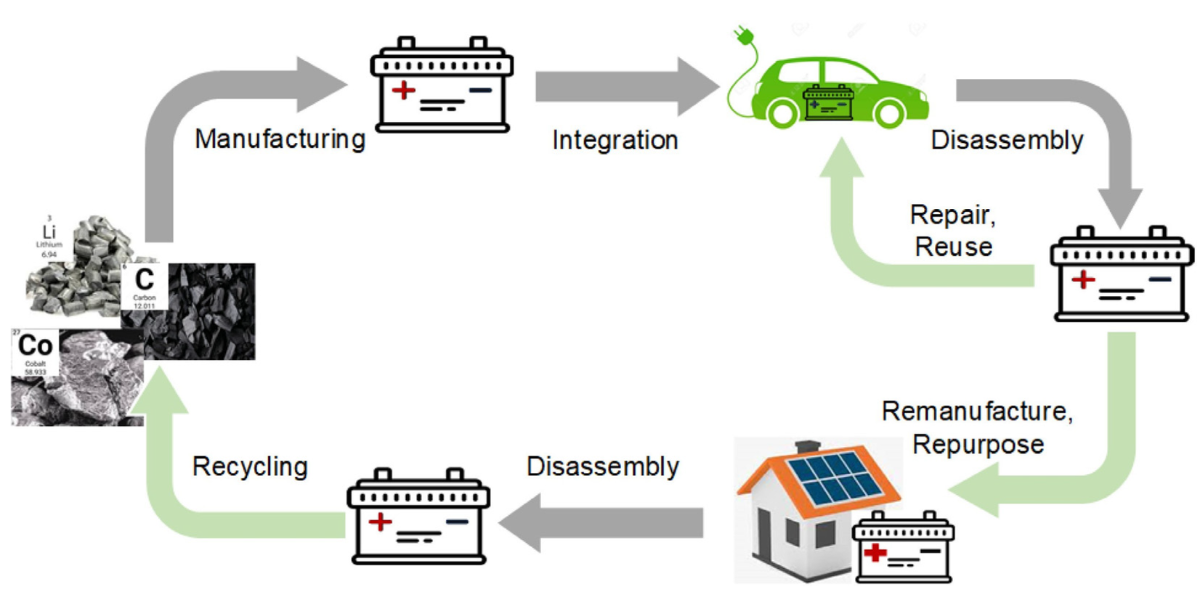
Automotive battery remanufacturing is fundamentally different from simple repair or end-of-life recycling. Where recycling breaks down batteries into constituent raw materials like lithium, cobalt, and nickel for reuse in fresh production lines, remanufacturing strives to restore used battery packs or modules to performance levels comparable with new products. This not only conserves the significant financial and environmental value embedded in mature battery systems, but also offers manufacturers and consumers a cost-effective alternative to purchasing entirely new packs. By reconditioning and validating these systems to stringent quality and safety standards, remanufactured batteries can re-enter automotive service with warranties similar
to those for new units, thereby extending their useful life and deferring the need for raw material extraction and high-energy manufacturing.
The recovery of battery modules
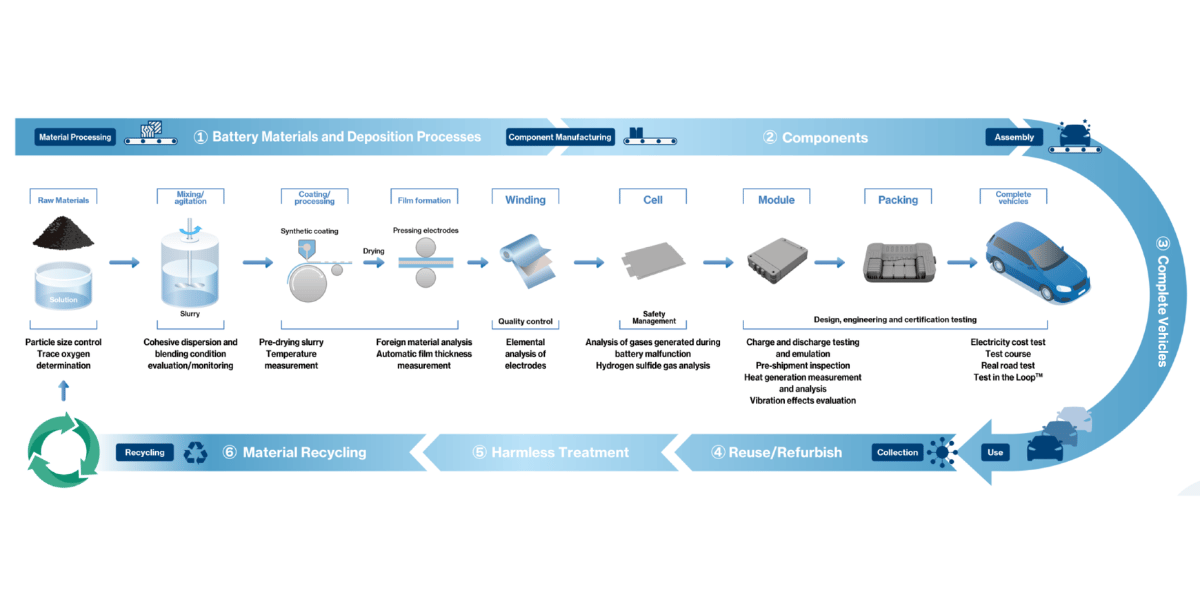
Several recent analyses indicate that with accurate diagnostics and targeted component replacement, a surprisingly high proportion of battery modules can be preserved—one industry source reported that around 92 % of modules in “failed” EV batteries remain functional, and only approximately 1.1 modules on average require replacement to restore a pack. Such findings dramatically challenge earlier assumptions about wholesale disposal of degraded systems and reinforce remanufacturing’s economic and environmental promise. The technical complexity of remanufacturing automotive batteries stems from the intricate architecture of modern high-voltage packs. These systems comprise hundreds to thousands of interconnected cells, modules, battery management systems (BMS), thermal controls, and safety interlocks. As batteries age through electrochemical mechanisms such as solid electrolyte interphase (SEI) growth, lithium plating, and cathode wear, degradation patterns are rarely uniform across all cells. Consequently, effective remanufacturing relies on sophisticated diagnostic tools that can precisely measure state of health (SOH), internal resistance, capacity, and historical performance data.
The use of AI
Advanced techniques—including impedance spectroscopy, thermal imaging, controlled charge-discharge cycling, and rich BMS telemetry analysis—are increasingly integrated with machine learning and digital twin models to enhance accuracy and throughput in battery assessment. These digital tools simulate battery performance and degradation pathways using real use-history metrics, making it easier to decide which components can be salvaged and which require replacement, ultimately improving yield and reducing waste.
Safety protocols
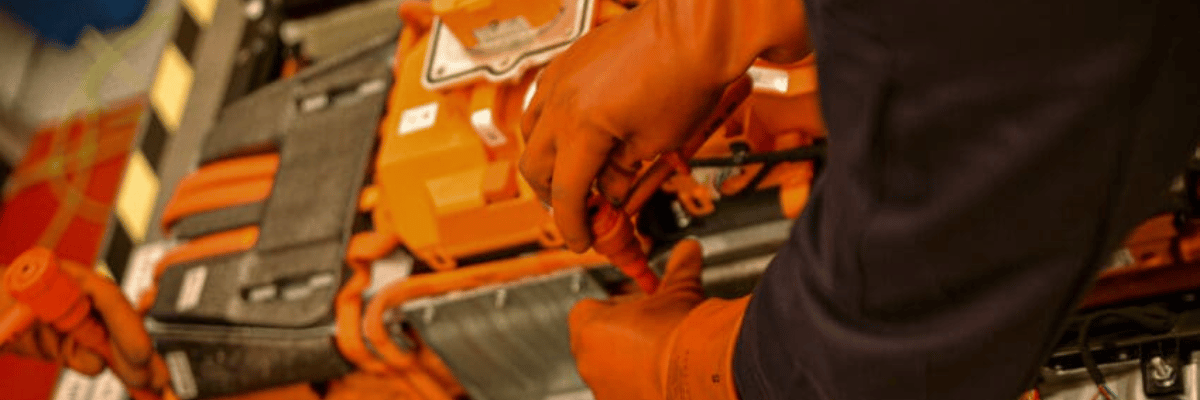
Safety is a main concern in remanufacturing high-voltage automotive batteries. With operating voltages often exceeding several hundred volts, disassembly, cell extraction, and module reassembly must be performed under rigorous safety protocols to prevent electric shock, short circuits, and thermal runaway events. Automated and semi-automated disassembly robotics, incorporating precise handling and isolation mechanisms, are increasingly deployed to reduce operator exposure to hazardous conditions and boost process consistency.
IRs and OEMs, a crucial collaboration
Remanufacturers and OEM partners are also collaborating on “design for remanufacturing,” identifying ways to standardize pack layouts, modularize components, and improve accessibility of critical parts, thereby trimming labour costs and enhancing scalability of remanufacturing operations. Once diagnostic sorting is complete, remanufacturers select cells and modules that meet defined quality thresholds to remain in a re-engineered pack.
Degraded cells are replaced with either new components or high-quality cells harvested from other packs destined for recycling. Sorting algorithms and performance-matching strategies are applied to ensure that cells within a remanufactured pack exhibit similar capacity and internal resistance, a crucial factor for balanced operation and long-term reliability. Given the complexity of battery pack electronics, remanufacturers also often update or recalibrate the BMS to reflect the unique characteristics of the refurbished pack, ensuring that safety limits, charge algorithms, and thermal response profiles align with the new configuration.
Quality assurance and certification form the backbone of consumer confidence in remanufactured batteries. In automotive contexts—where safety and reliability are non-negotiable—remanufactured packs often undergo comprehensive validation, mimicking OEM end-of-line tests. These include thermal stress testing, vibration and shock resistance, electrical integrity evaluation, and safety margin confirmation under extreme conditions. In markets like the European Union, evolving regulatory frameworks such as the EU Batteries Regulation and digital battery passport initiatives are enhancing transparency and lifecycle traceability, enabling remanufacturers to better track battery origins, service histories, and chemistry compositions.
This improved data transparency not only raises compliance requirements but also expands market opportunities by reducing uncertainties about core quality and fostering trust among fleet operators and individual EV buyers.