Circular Economy in the Automotive Remanufacturing – part one
In the automotive sector, the circular economy is transitioning from a theoretical sustainability goal to a core strategic imperative. As of March 2026, the European Union is implementing landmark regulations to mandate vehicle circularity and strengthen repair rights, directly impacting remanufacturing and the secondary parts market.
Circular economy means remanufacturing
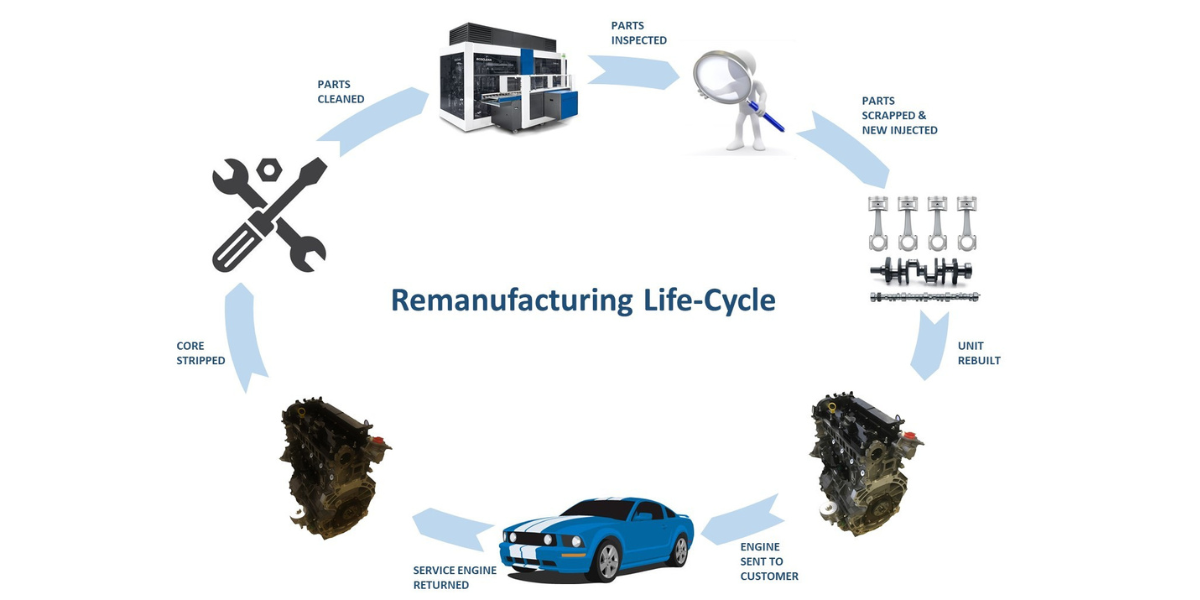
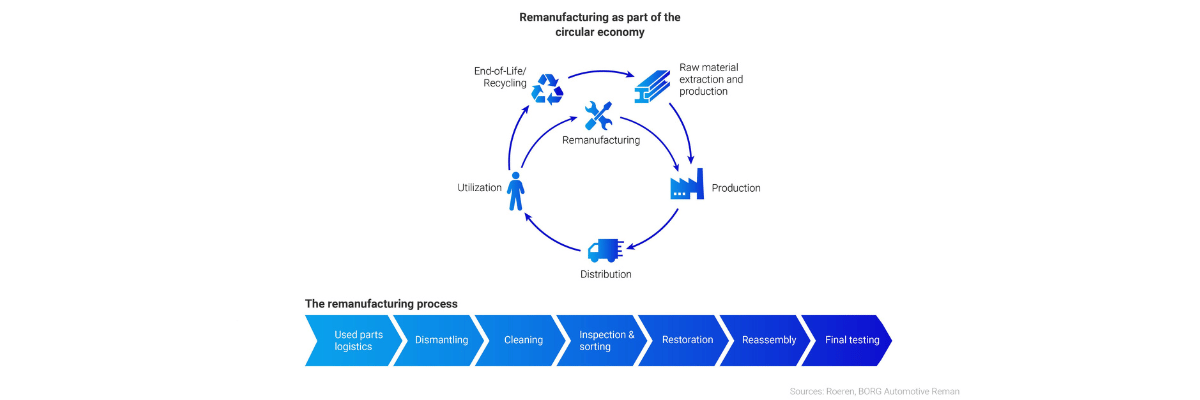
The automotive industry is currently navigating one of the most profound structural shifts in its history, moving away from a linear "take-make-dispose" model toward a sophisticated circular economy cantered on remanufacturing. Remanufacturing—the industrial process of restoring used components to a condition equal to or better than their original specification—has emerged as the cornerstone of this transition. In the European Union, this evolution is no longer merely driven by corporate social responsibility but is dictated by a rigorous legislative framework that reached several critical milestones between 2024 and 2026. The current scenario is defined by the convergence of the Right to Repair movement, the New Circular Economy Action Plan, and the specific challenges posed by the electrification of the global fleet. At its core, automotive remanufacturing addresses the dual pressure of resource scarcity and decarbonization.
A “value-add”
Unlike simple repair or recycling, remanufacturing preserves the "value-add" of a component, such as the energy and labour embedded in its original casting and machining. By keeping high-value parts like engines, transmissions, and steering racks in the economic loop, the industry can reduce energy consumption by up to 80% and raw material use by nearly 90% compared to manufacturing new parts. As of 2026, the European market for remanufactured automotive parts has matured into a multi-billion-euro ecosystem, supported by both Independent Aftermarket (IAM) players and Original Equipment Manufacturers (OEMs), who are increasingly rebranding themselves as "mobility providers" rather than just vehicle retailers.
The “Right-to-Repair” Directive
The latest news regarding the Right to Repair in the EU represents a paradigm shift for the industry. The "Right to Repair" Directive (EU 2024/1799), which entered a critical implementation phase in early 2026, has fundamentally changed the power dynamics between car manufacturers and independent repair shops. This legislation mandates that manufacturer must provide access to spare parts, diagnostic tools, and repair information at a reasonable cost and for a minimum of ten years after a model ceases production. Crucially, the directive prohibits "software locks" or "part pairing"—technical barriers that previously prevented independent mechanics from installing remanufactured or third-party components. This is a massive victory for the circular economy, as it ensures that a vehicle's life can be extended through affordable, remanufactured alternatives rather than being scrapped due to the prohibitive cost of new OEM parts. Furthermore, the EU has recently introduced a "European Repair Information Platform," a centralized digital gateway that allows consumers and professionals to find local repair services and compare the availability of remanufactured parts, further incentivizing the choice of refurbished components over new ones.
End-of-Life Vehicles (ELV) Regulation
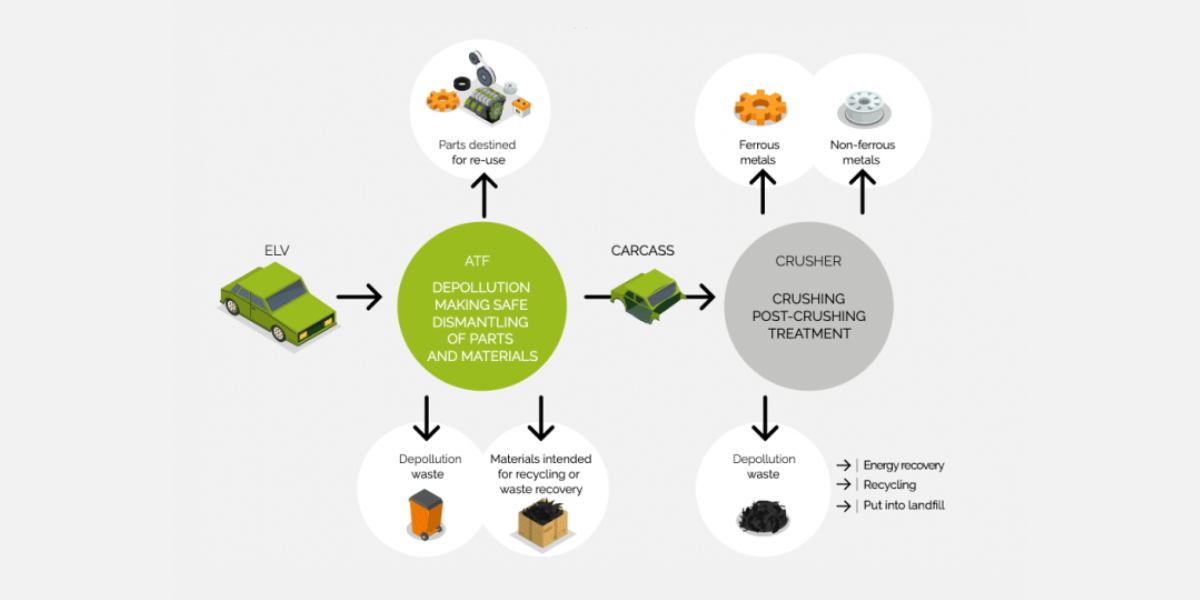
In parallel with the Right to Repair, the EU's updated End-of-Life Vehicles (ELV) Regulation, which saw major revisions in late 2025, now places a heavy emphasis on "Design for Remanufacturing." This means that new vehicles hitting the market in 2026 and beyond must be engineered for easy disassembly. The regulation includes mandatory targets for the use of recycled plastics and metals in new cars, but more importantly, it introduces a "Circularity Vehicle Passport." This digital tool tracks the history of a vehicle and its major components, providing remanufacturers with essential data on the state of "cores"—the used parts that serve as the raw material for remanufacturing. By knowing the exact usage history and material composition of a component, remanufacturers can significantly reduce the risk and cost of the remanufacturing process.
The importance of a “Passport” for BEVs
This data-driven approach is particularly vital for the electric vehicle sector. As the first generation of mass-market EVs reaches the end of its initial lifecycle, the remanufacturing of traction batteries has become a strategic priority for the EU. New rules regarding battery passports, which is now fully operational in 2026, ensure that lithium-ion batteries are either remanufactured for a "second life" in stationary energy storage or refurbished for continued use in vehicles, preventing a massive waste crisis while securing the supply of critical raw materials like lithium and cobalt. The current scenario also highlights a change in consumer behaviour and insurance practices. In many EU member states, insurance companies are now encouraged—and in some jurisdictions,
required—to offer quotes based on the use of "green" or remanufactured parts for non-safety-critical repairs. This has normalized the use of remanufactured alternators, starters, and turbochargers among the general public, who now view these parts as environmentally responsible and cost-effective rather than "second-hand."
Circular Automotive Skills Alliance
However, the industry still faces hurdles, particularly regarding the shortage of skilled labour capable of handling the complex electronics and high-voltage systems of modern vehicles. To combat this, the EU has launched the "Circular Automotive Skills Alliance," a program designed to retrain thousands of remanufacturing and digital diagnostics techniques. Additionally, the export of used vehicles has come under intense scrutiny. To prevent "leakage" of valuable materials from the European circular loop, new export bans on non-roadworthy vehicles were enforced in early 2026, ensuring that car containing valuable remanufacturable parts stay within the EU's industrial ecosystem.