Battery remanufacturing, the current scenario
The remanufacturing of batteries from BEVs is rapidly emerging as one of the most strategically important areas of the automotive circular economy. As global electric-vehicle deployment continues to accelerate, the number of traction batteries reaching repair, replacement, second-life or end-of-life stages is beginning to increase.
The scale of the opportunity is significant. According to the International Energy Agency (IEA), global EV battery deployment reached around 1.2 TWh in 2025, reflecting the rapid expansion of electric mobility worldwide. The IEA expects this figure to rise to almost 3 TWh by 2030, highlighting the enormous future volume of batteries that will eventually require repair, remanufacturing, second-life applications and recycling.
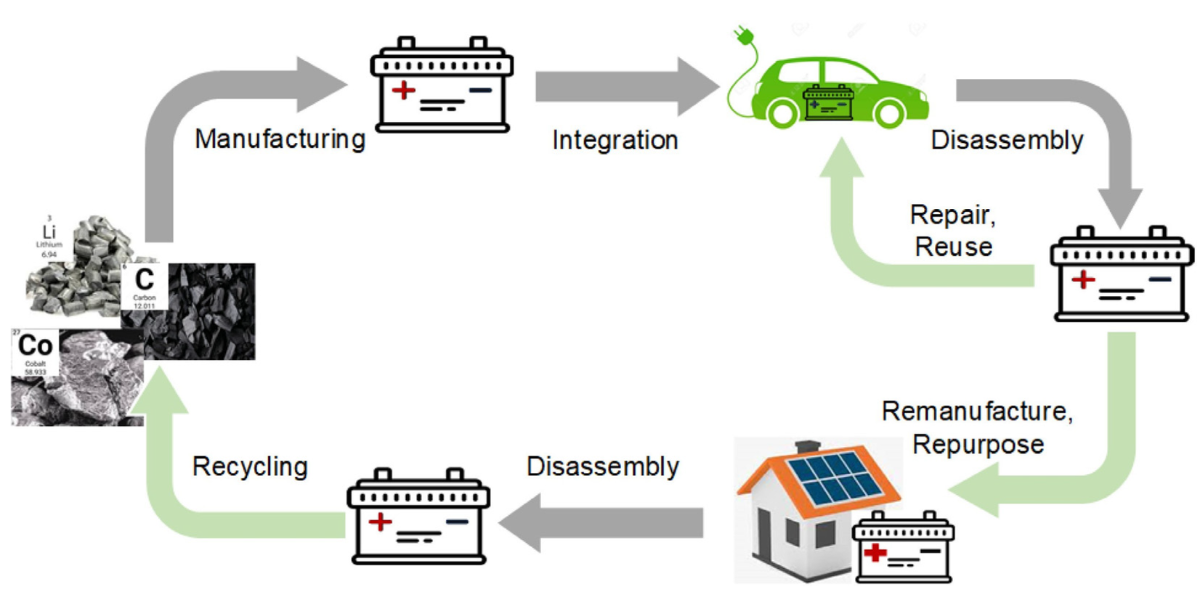
This expanding installed base is creating the foundations of a new industrial ecosystem in which batteries are no longer considered disposable components, but valuable assets that can potentially be diagnosed, repaired, remanufactured, reused and finally recycled.
An unconventional remanufacturing approach
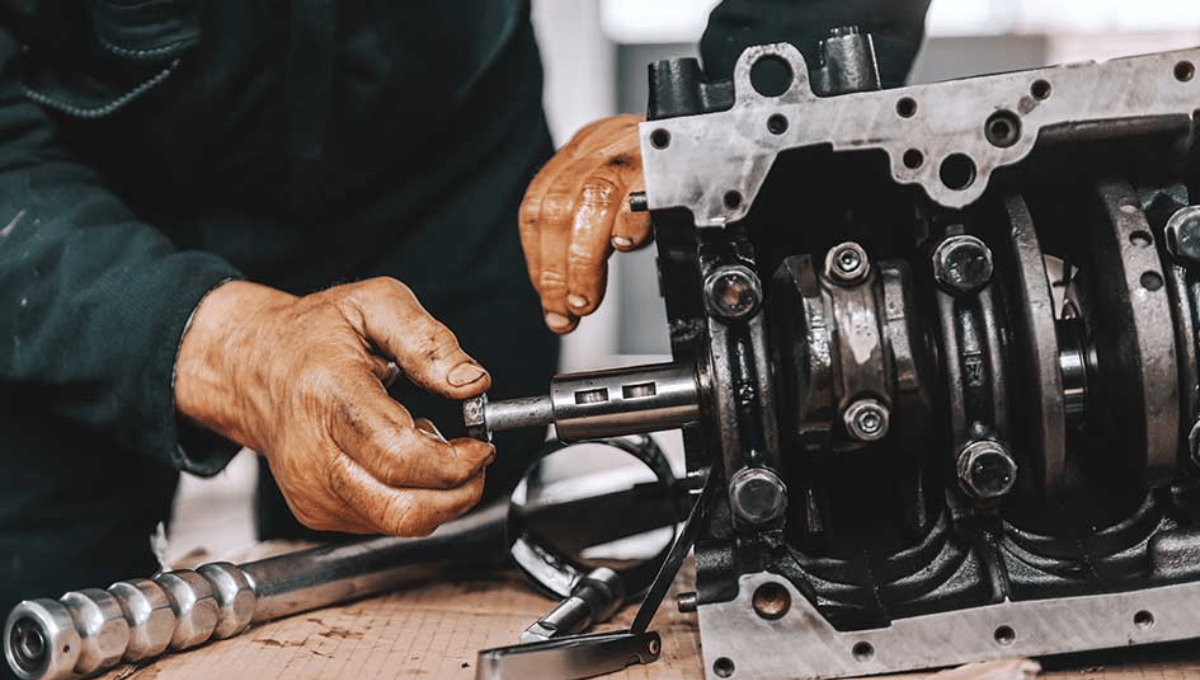
Battery remanufacturing is considerably more complex than conventional automotive remanufacturing. A traditional remanufactured engine, transmission, alternator or brake caliper can generally be disassembled, inspected, cleaned, measured, repaired and rebuilt according to established procedures.
A BEV battery requires a much more sophisticated approach because its condition depends not only on visible physical damage, but also on electrochemical degradation, cell balancing, thermal history, charging behaviour, software, battery-management-system data and the condition of individual modules and cells. The central question is therefore not simply whether a battery still works, but which parts of the battery retain sufficient performance, safety and reliability to be reused.
State of Health (SOH) has consequently become one of the most important parameters in the emerging remanufacturing process. Accurate diagnosis must determine remaining capacity, internal resistance, cell-to-cell variation, thermal behaviour and potential safety risks. Advanced diagnostic systems are increasingly combining battery-management-system data with electrical measurements, historical operating information and automated testing.
This is particularly important because a battery pack may have a relatively acceptable average SOH while containing individual cells or modules that are significantly weaker. Recent research illustrates this challenge: field data from a second-life battery system showed that models based only on average module behaviour could substantially overestimate SOH when weaker individual cells were not identified.
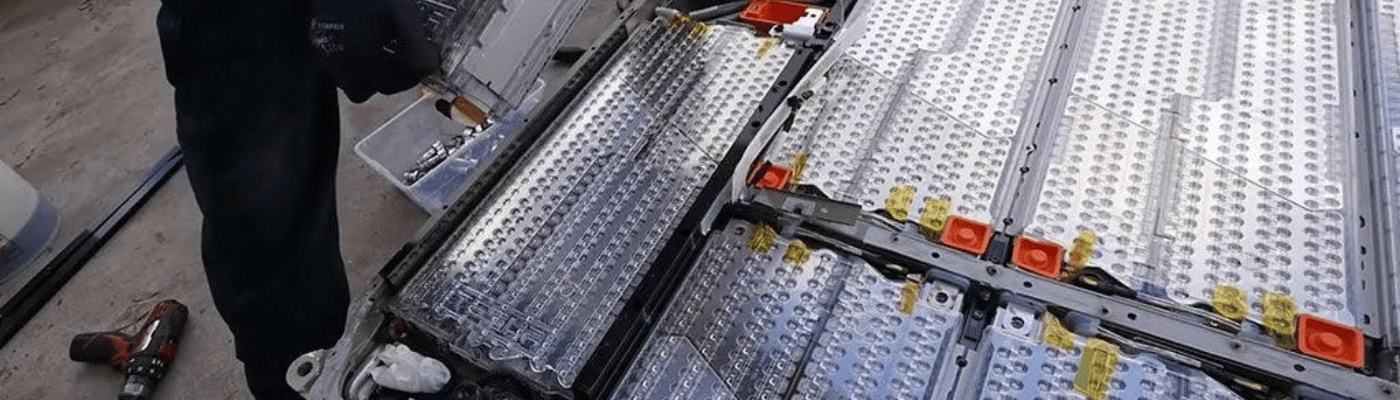
This makes battery disassembly and module-level testing fundamental stages of BEV battery remanufacturing. Instead of automatically replacing an entire battery pack, specialist operators can potentially identify defective modules, electronics, cooling components, connectors or sensors and replace only the damaged elements. The objective is to recover as much functional value as possible while reducing material consumption and cost.
Replacement vs remanufacturing
In some cases, the most economically attractive solution may be repair; in others, module replacement or complete remanufacturing may be preferable. The boundary between repair, remanufacturing, refurbishment, reuse and recycling is therefore becoming increasingly important for the automotive aftermarket.
One of the major developments influencing this market is the growing availability of battery data. Digital information can provide a much clearer picture of a battery's history, including charging cycles, operating temperatures, energy throughput and degradation.
The European Union's Battery Regulation, Regulation (EU) 2023/1542, is reinforcing this transition by establishing requirements covering sustainability, safety, information, waste-battery management and battery passports. Its objective is to ensure that batteries have a lower environmental impact and that materials and products remain within more circular European value chains.
Second-life applications as an opportunity and a challenge
The Battery Passport is particularly relevant to remanufacturing because traceability can become a major competitive advantage. A digital record containing information about battery characteristics, origin, performance and lifecycle history can help operators determine, as seen before, whether a returned battery is suitable for repair, remanufacturing, second-life use or recycling.
For the remanufacturing sector, reliable information can reduce diagnostic time, improve residual-value assessment and support more accurate decisions concerning individual modules and cells.
Another important development is the growth of second-life applications. Not every battery that is no longer suitable for automotive use has reached the end of its useful life. A battery whose performance is insufficient for a BEV may still be capable of providing stationary energy storage, backup power, renewable-energy storage or other less demanding services.
The IEA has identified battery reuse for less demanding applications as an important developing area, with many companies active in Europe. This creates a hierarchy of value in which the battery can potentially remain productive for considerably longer before its materials finally enter the recycling process.
For automotive remanufacturers, this represents both an opportunity and a challenge. The traditional remanufacturing business model is based on returning a component to a defined level of functional performance for another automotive application. With BEV batteries, the potential destination of recovered components is much broader.
A module removed from one vehicle could theoretically become part of another automotive battery, while other modules might be integrated into a stationary-storage system. The ability to determine the technical and economic value of each component will therefore become a critical competence.
Safety requires attention
Safety remains perhaps the most important barrier to rapid expansion. High-voltage batteries contain substantial quantities of stored energy and can present electrical, thermal and chemical hazards when damaged or incorrectly handled.
A professional remanufacturing operation therefore requires specialized equipment, trained technicians, controlled working environments and procedures for isolation, discharging, testing and transportation. Thermal runaway is a particular concern, meaning that battery diagnosis cannot be treated as a conventional mechanical workshop activity.
The development of dedicated certification, training and safety standards will be essential if the independent aftermarket is to expand its role.
More diffusion, lower costs
Battery prices have fallen significantly over the past decade, while battery chemistry and pack architectures are evolving rapidly. This means that remanufacturing must compete with increasingly affordable new batteries. At the same time, labour-intensive disassembly and testing can make remanufactured packs expensive.
Automation will therefore become increasingly important. Robotic disassembly, automated electrical testing, machine vision, AI-supported diagnostics and digital identification systems could reduce labour costs and improve consistency.
Chemistry is another major variable. NMC, LFP and other lithium-ion chemistries have different characteristics, degradation mechanisms and economic values. The growth of LFP batteries, in particular, changes the economics of recovery because their chemistry contains less or no nickel and cobalt compared with NMC systems.
Consequently, the value proposition of remanufacturing and recycling cannot be based on a single universal model. Each battery must increasingly be assessed according to its chemistry, architecture, SOH, remaining useful life and intended second application.
An emerging ecosystem for a different paradigm
The European market is particularly interesting because regulation, electrification and circular-economy policy are developing simultaneously. The battery regulation is creating stronger requirements for traceability and sustainability, while the rapidly growing BEV fleet is gradually creating the future feedstock for the remanufacturing industry.
The result is an emerging ecosystem involving vehicle manufacturers, battery producers, independent remanufacturers, dismantlers, diagnostic companies, recyclers, logistics providers and energy-storage specialists.
For the automotive aftermarket, this could represent one of the most significant structural changes of the coming decade. Independent specialists able to diagnose, repair and remanufacture battery systems could provide more affordable alternatives to complete battery replacement, extending vehicle lifetimes and improving residual values.
With EV battery volumes continuing to grow, better diagnostic technologies, digital traceability, second-life applications and increasingly stringent European sustainability requirements, the battery is moving from being one of the most expensive components of an electric vehicle to becoming one of its most valuable circular assets.
For the remanufacturing industry, the future will be about intelligently assessing remaining value and deciding, battery by battery and module by module, whether the best solution is repair, remanufacturing, reuse, second life or recycling.
That shift, from replacing components to managing their entire lifecycle, could make BEV batteries one of the most important new fields for automotive remanufacturing and the circular aftermarket.